

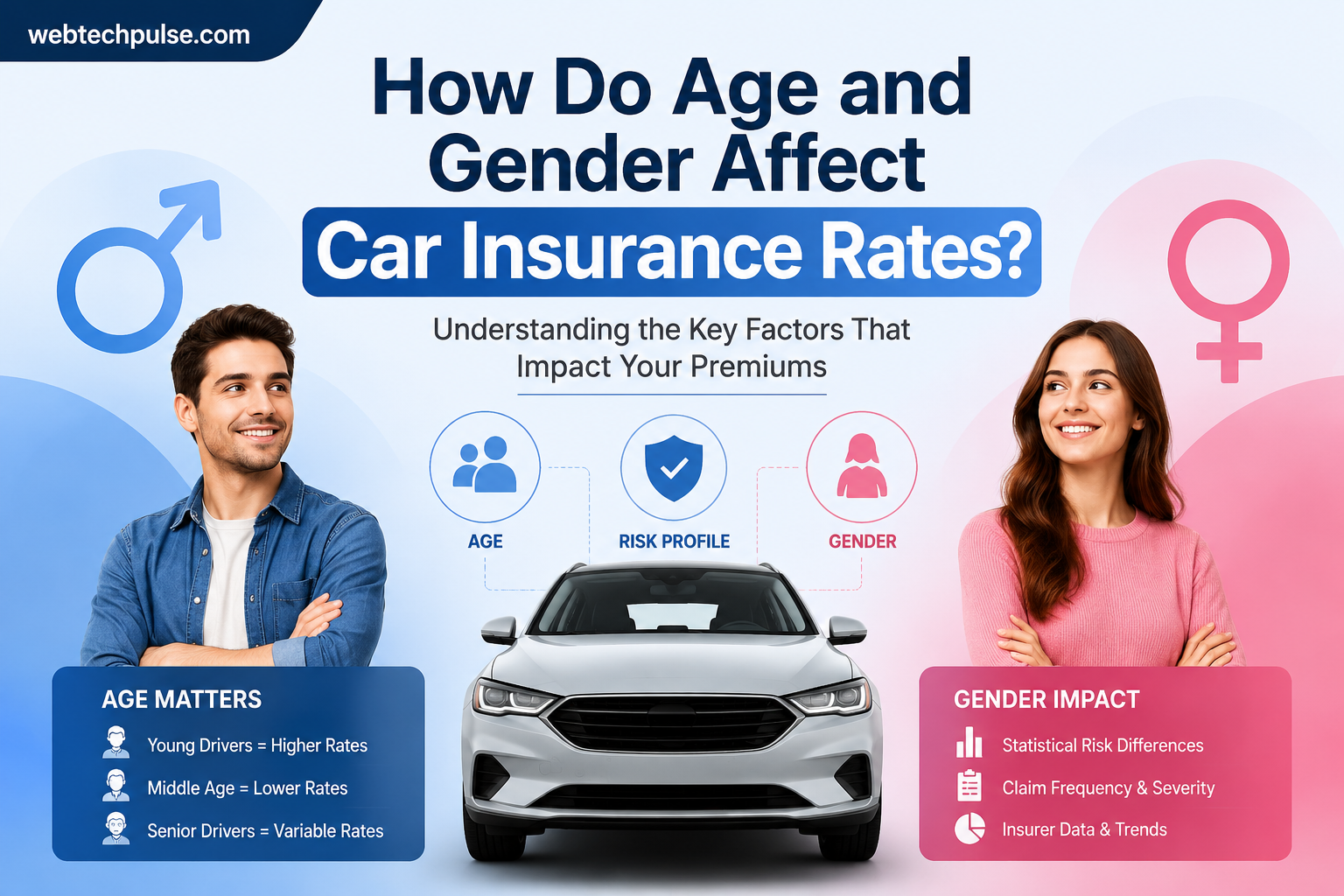
Ever wondered why two people with the same car and location can get completely different car insurance quotes? It’s not just about the vehicle; it’s about you. Factors like age and gender play a big role in how insurers calculate risk, since they can influence driving habits, claim patterns and accident likelihood. Understanding how these personal factors impact your car insurance premium can help you see why rates vary and make smarter choices when picking your coverage.
Why Insurers Consider Age and Gender#
Insurers calculate car insurance premiums based on risk assessment. Age and gender are among the demographic indicators that help determine how likely a person is to make a claim. While these factors are not the key criteria, they provide statistical insights into driving patterns and accident tendencies.
How Age Influences Car Insurance Rates#
Age is one of the strongest predictors of driving risk. Insurance companies rely on accident data to determine how age affects driver safety and claim frequency.
Here is why the age matters:
-
Young Drivers (18–25 years)#
Younger drivers, particularly those under the age of 25, generally face higher premiums. This is because they are statistically more likely to be involved in accidents due to limited experience, overconfidence and riskier driving behaviour. Insurers view this age group as high-risk, resulting in higher premium amounts.
2. Middle-Aged Drivers (26–60 years)#
Premiums tend to stabilise once drivers reach their late 20s or early 30s. At this stage, motorists have gained considerable experience and tend to drive more responsibly. As a result, this age group usually enjoys lower premiums.
3. Senior Drivers (60 years and above)#
For older drivers, premiums may rise again. Age-related factors such as slower reflexes, reduced vision or health issues can increase the risk of accidents. Hence, insurers may adjust rates accordingly. However, safe driving records and regular vehicle maintenance can still positively influence premiums.
How Gender Impacts Car Insurance Rates#
Gender is another factor used to assess driving risk. While every individual’s driving behaviour differs, data trends show varying patterns between male and female drivers.
1. Male Drivers#
In many cases, male drivers, especially younger ones, are statistically more likely to be involved in high-speed collisions or risky driving situations. This results in higher average claims and, consequently, higher premiums in early driving years.
2. Female Drivers#
Studies suggest that female drivers, on average, are less likely to engage in aggressive driving and tend to file fewer major claims. Therefore, insurers may offer slightly lower premiums to female drivers in similar risk categories.
However, it is important to note that these are generalised trends based on claim statistics and do not necessarily apply to every individual. Insurers use data-driven assessments rather than assumptions about personal behaviour.
Other Factors That Affect Premiums#
While age and gender are key contributors, several other elements also determine how much you pay for car insurance. Some of the most common include:
- Vehicle type: The make, model and engine capacity influence premiums. Expensive or high-performance cars usually attract higher rates.
- Driving history: A clean driving record with minimal traffic violations can help reduce premiums.
- Location: Urban areas with dense traffic and higher accident rates often lead to higher premiums than rural regions.
- Coverage type: Opting for comprehensive car insurance, which covers both third-party and own-damage losses, will cost more. However, it provides broader protection, including theft, fire and natural disasters.
- No Claim Bonus (NCB): Maintaining a claim-free record can earn you a discount on renewal premiums.
Comprehensive Car Insurance#
If you want broader protection for your car, a comprehensive car insurance policy is the way to go. It not only covers third-party liabilities but also protects your own vehicle from damages caused by accidents, theft, vandalism, fire or natural disasters, depending on the insurer’s terms and conditions.
While the premium is slightly higher, the peace of mind and wider coverage it offers often make it worth every penny. In the long run, a comprehensive policy can save you from unexpected financial setbacks.
Why Buying Car Insurance Online Makes Sense#
Purchasing car insurance online allows you to compare coverage options, understand benefits and make informed decisions from the comfort of your home. Online platforms also simplify policy renewal, premium calculation and claim tracking. Additionally, digital tools enable you to adjust coverage, add optional covers or review the impact of age and gender on your premium before finalising the purchase.
Conclusion#
Age and gender play a key role in how insurers determine car insurance premiums. Using years of statistical data, insurers assess how different groups tend to drive and claim. Generally, younger and senior drivers are seen as higher-risk, which often leads to higher premiums, while middle-aged motorists usually enjoy lower rates. Similarly, gender-based variations arise from claim patterns observed across different age groups.
By understanding how these factors affect your premium, you can look at quotes more objectively and plan your coverage wisely. Whether you’re buying your first policy or renewing an existing one, comparing plans and reading the wordings can help you find the protection that truly fits your needs.


